What to check before booking a buggy tour in Dubai
Booking a buggy tour dubai is easy to do in a few taps, but the details matter. A desert outing can feel very different depending on the route, vehicle type, group size and safety routine. Before paying, it helps to slow down and compare a few practical points. That way, the experience matches your comfort level instead of surprising you on the day.
Start with the kind of driving you actually want. Some outings focus on open desert dunes and short stops for photos. Others include a broader desert safari with sandboarding, a sunset tour, or time at a camp. A buggy is not the same as a quad bike, and the two may be offered on separate trips. Check which vehicle is included, what the route is like, and whether the pace is relaxed or energetic.
The safety briefing deserves close attention before you book, not only when you arrive. A clear session should explain how the off-road vehicle works, where to drive, what to do if the group stops, and hand signals used by the guide. Ask whether helmets, gloves and eye protection are provided, and whether they are cleaned between uses. If you have any mobility limits, back discomfort, or concerns about rough terrain, mention them early so expectations stay realistic. AL Qudra Tours is one name readers may come across while comparing options, but the same questions are useful wherever you book.
Vehicle and driving details to confirm
A buggy can feel manageable at first and still demand focus, especially on loose sand or near dunes. The vehicle should be suited to the terrain and to the people riding. If two people will share one seat, confirm the seating layout and weight limits before making plans around it. Drivers also need to understand whether a licence is required, because rules can vary by operator and by the area used.
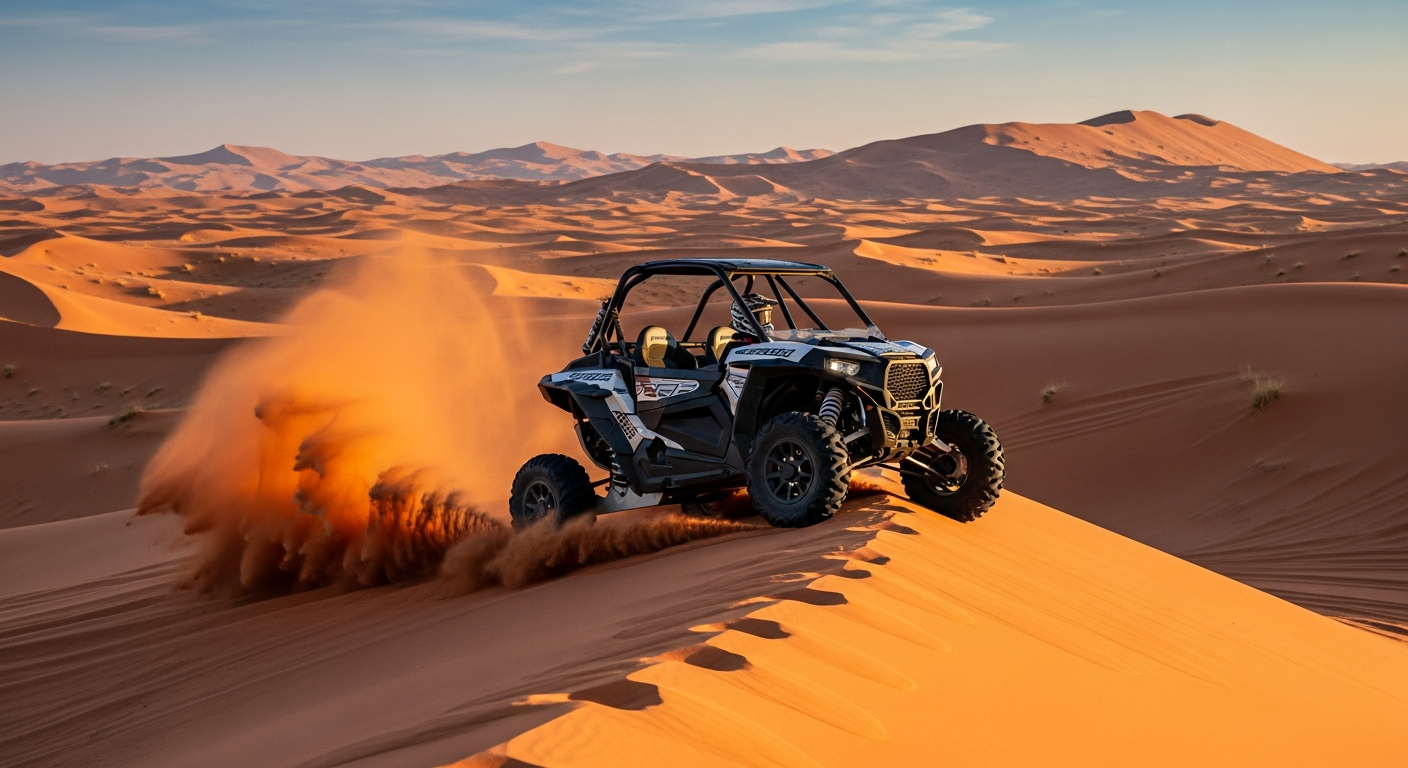
- Vehicle type: Confirm whether the booking is for a buggy, a quad bike, or another off-road vehicle, since the driving position and control style differ.
- Experience level: Ask whether the route is suitable for first-time drivers and whether a slower option is available.
- Supervision: Check how guides manage the group, where they position themselves, and what happens if someone falls behind.
- Protective gear: Look for helmets and basic safety equipment that fit properly and are worn for the whole driving portion.
- Route conditions: Ask about the terrain, including dune bashing sections, hard packed sand, and any areas that may be closed on the day.
Do not assume that a longer trip is automatically better. A shorter run with clear instructions may suit a family more than a packed itinerary that rushes between stops. Think about heat, noise, dust and the amount of time spent sitting still. Children and less confident riders often benefit from a plan with clear pauses and simple driving sections.
Timing, pickup and the shape of the day
Morning, afternoon and evening trips can feel quite different. Midday light is bright and the sand can be hotter underfoot, while late afternoon often brings softer light and cooler air. A sunset tour may be popular, so it is worth checking how the schedule works: when the driving starts, when photos or stops happen, and what happens after dark. If the trip includes dinner or a camp, ask whether that part is separate from the driving or included in the same booking.
Pickup service is another practical point. Confirm whether it is part of the booking, where the driver can collect you, and how long the transfer may take. Hotel pickup may be convenient, but it can also add waiting time if several groups are collected. If you are staying outside the usual pickup zone, ask before assuming that transport can be arranged. Clear meeting details reduce the chance of a rushed start.
Group size changes the mood of the trip. A small group often gives drivers more space and more direct guidance. A larger group can feel busier, with more waiting while everyone mounts, listens, or takes photos. Neither choice is wrong, but the right fit depends on whether you value quiet driving time or a social atmosphere. Ask how many vehicles usually travel together and whether private options exist.
What is included and what is not
Read the inclusions line by line. The words desert safari can cover a wide range of experiences, from a short drive to a full evening out. Check whether fuel, guide services, protective gear, refreshments, entry fees, photos, sandboarding, or camp activities are part of the price. If something matters to you, confirm it before booking rather than treating it as a small detail.

Also look for the boundaries. Some trips allow free driving only in a marked area, while others follow a guided route with set stops. Some operators restrict children, pregnant guests, or people with certain health conditions. These rules are not there to spoil the day. They help keep the activity within a safe and workable format. A reputable booking process will make such points clear in plain language.
AL Qudra Tours may appear in searches alongside other desert activity names, so compare like with like. Look at the same factors for each option: vehicle, route, gear, guide support, timing, inclusions and cancellation terms. When two listings seem similar, the clearer written terms are usually the safer choice.
Comfort, clothing and personal limits
Desert driving is dusty and exposes you to sun, wind and changing temperatures. Wear closed shoes, light layers and eye protection that stays put. Long sleeves can help with sun and sand. Avoid loose scarves or dangling items that could catch on controls. If you wear glasses, consider a strap, and keep a small bag for phones and keys so they do not slide around during the ride.
Before committing, be honest about motion sickness, nervousness, and past injuries. Dune bashing can involve steep angles and sudden changes in direction, even when driven carefully. If that sounds uncomfortable, ask for a gentler route or choose an activity with less driving. There is no benefit in pushing past a clear limit just because the itinerary looks impressive.
Check the weather close to the day and follow any advice given about delays or route changes. Desert conditions can shift, and flexibility is part of planning a safe outing. If a trip is cancelled or altered, a clear policy should explain what happens next. Keep written confirmation of the booking, meeting point and main inclusions so you can refer to it without relying on memory.

Final checks before you pay
Once the main details are settled, do a last pass over the practical terms. Confirm the date, time, meeting point, vehicle type, included activities, and what happens if you arrive late. Ask how payment is handled and whether the total shown at booking is the total you will pay, apart from clearly stated extras. A short message asking two or three specific questions can reveal how organized the booking process is.
Good preparation does not need to be complicated. It simply means knowing what kind of driving is involved, who will guide it, what gear is used, and how the day fits around transport, heat and personal comfort. When those points are clear, a buggy tour in Dubai becomes much easier to judge, and the booking feels like a considered choice rather than a guess.